
In this story
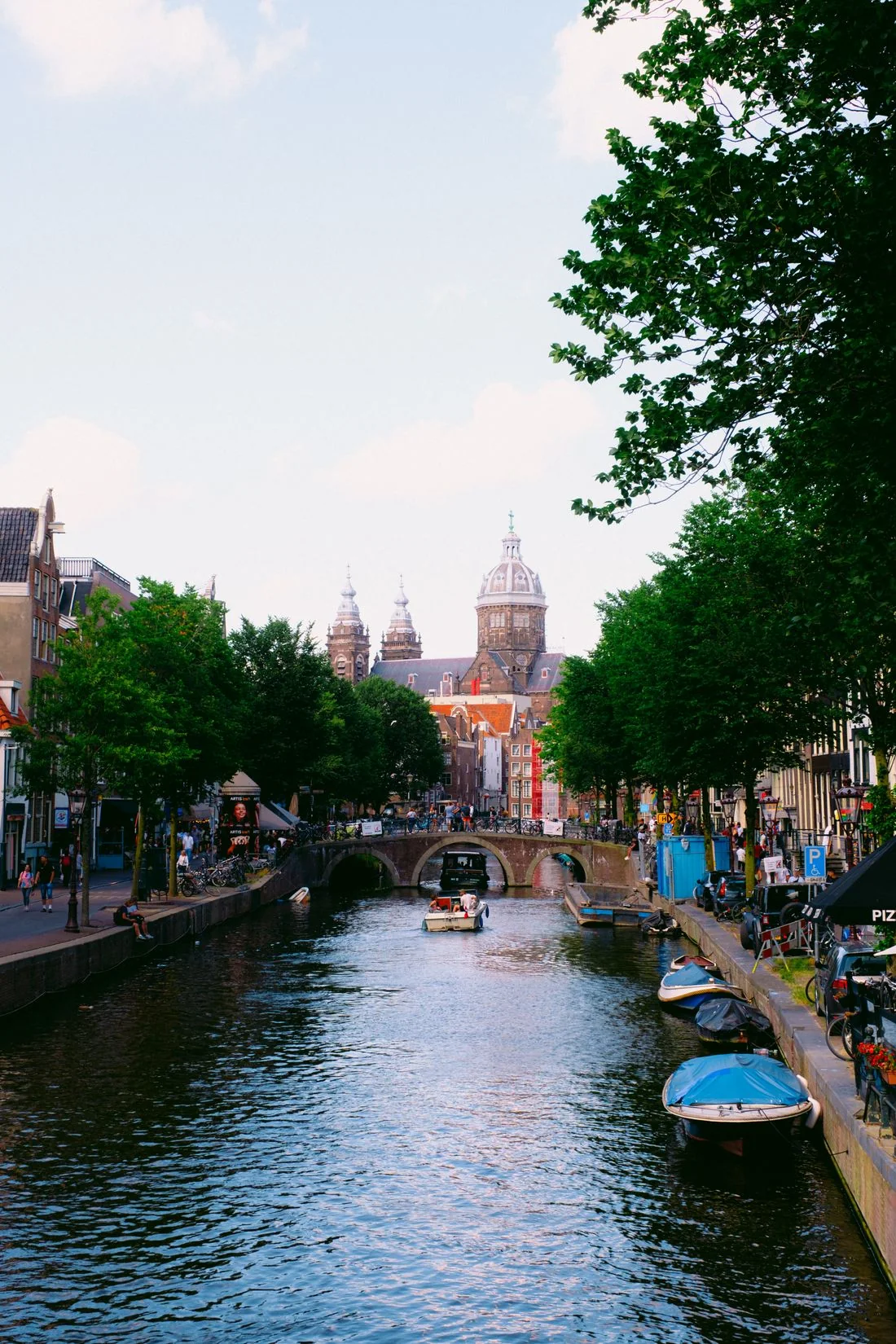
A canal scene offers two related subjects: the buildings above the water and the changing shapes reflected below. Describe the relationship rather than treating the reflection as a second exact copy. A short written account can notice colour, edges and movement without needing a history of every facade. Keep the visible observation separate from any identification or explanation you have not established.
Choose a position you can use considerately
Observe from an ordinary permitted public place, following local instructions and keeping routes clear. Do not lean into an unsuitable position or occupy a working edge to improve the view. If the place does not support a pause, look briefly and write later from a suitable reference or an honest limited memory.
Keep the activity small. You are choosing a few relationships in one scene, not attempting to catalogue the whole waterfront. The different travel paces guide helps if a companion would prefer a shorter stop or another use of the time.
Describe the shapes above the water
Begin with broad visible forms: a group of facades, a bridge opening or a line of trees. Notice which colour or shape draws your attention first. Avoid naming a building's age, style or original purpose solely through its appearance.
Choose a clear direction for the paragraph, perhaps from a nearby edge towards the more distant buildings. You do not need every object in the frame. A small number of specific details can make the scene easier to imagine than an inventory of windows, boats and rooflines.
Look for the related shapes below
Notice where a colour from above appears on the water and how its edge differs. A bright area may become a broken band, while a dark opening may read as a broader patch. Describe what is actually visible at the moment rather than completing the reflection into a perfect mirror in your mind.
If the surface changes, keep the account tied to the observation you made. You can say that the shape was briefly clear or difficult to follow without explaining the physical cause through a guess. A moving view can remain understandable in a few plain words.
Keep the relationship central
Compare one element above and below rather than switching to unrelated details in every sentence. Ask what the reflection adds to the scene: a repeated colour, a softer edge or a different sense of space. State that as your response, not a rule about how every viewer experiences a canal.
The one-view notebook sketch guide offers another way to retain a selected relationship. A written description and a sketch can support each other when each has a clear role, but neither is required to make the other worthwhile.
Finish with an accurate location note where you can establish it and leave uncertain names open. The paragraph does not need to become a factual guide to the whole district. It has done enough when it makes the particular relationship between solid forms and reflected shapes clearer, while leaving the actual visit larger than the record you made.
KEEP READING
Browse the complete Lady Trekking journal →